















































































































Fixed-Blade Knife: Care, Sharpening, and Storage

Many people think a fixed blade doesn’t need care because it has no joint, spring, or lock that could break — and that’s exactly the misconception. The joint really can’t break. But rust, a damp sheath, a dull edge, or being left at the bottom of a backpack between a bottle and tools can ruin a knife.
A fixed blade will last for years if you wash it by hand after every use, dry it thoroughly, and store it dry. Never put a knife in the dishwasher, put it in its sheath while wet, or use it as a pry bar. Keep the edge sharp by honing it before it gets completely dull. Treat a wooden handle with oil from time to time, and lightly oil the metal parts if you’re storing the knife for a longer period.
What happens to a knife you put away in a wet sheath at night
You know how it goes. A whole day in the woods, cutting cord in the afternoon, slicing bacon in the evening, and the blade is left unwiped — it’s dark and nobody feels like dealing with it. You slide the knife into its sheath, put the sheath in your backpack, and forget about it. A few weeks later, you take it out and find orange spots on the edge.
The culprit is the enclosed space. Moisture stays right next to the blade inside the sheath, with nowhere to escape. Stainless steel rusts more slowly, but it isn’t indestructible: salt water, fruit juice, and food residue will damage it if left on the blade for hours. Carbon steel can discolor in just one evening. Fixed-blade knives are made from both types of steel, and each calls for a slightly different approach. If you don’t know what you’re holding, treat the knife as if it were made of carbon steel. It costs you nothing.
A post-use routine takes just a few minutes. Rinse the blade with warm water and a soft sponge, not a scouring pad, and wash off juice, grease, or resin right away, before it dries. Then dry the whole knife with a cloth, including the spot where the blade meets the handle, and leave it out in the air for a little while. Only then put it back in its sheath. For carbon steel, wipe the blade with a cloth lightly coated with a suitable oil.
Never put a knife in the dishwasher. Hot water, detergent, and rattling around among the plates will wear away the finish, dull the edge, and cause a wooden handle to swell and crack. Washing it by hand takes a moment, and your knife will last for years in return.


When your knife stops cutting: sharpening without the myths
On Tuesday, it sliced through a branch effortlessly; by Thursday, it’s slipping over a sausage. It isn’t broken, it’s dull. The quickest test: place it against the skin of a tomato without applying pressure. A sharp knife will bite in; a dull one will slide. If you have to press, it’s time to reach for a sharpening stone.
A sharpening stone removes a tiny amount of metal from the blade to create a new edge. Wet it with water or oil, depending on what it’s designed for, hold the blade at a consistent angle, and draw it from heel to tip. Spend the same amount of time on each side. At the end, remove the fine burr on the finest side of the stone or on a leather strop. A coarser stone restores the edge quickly; a finer one smooths it out.
The most common mistake is letting the angle vary. If you lift the handle as you make your strokes, you can unintentionally round off the edge, making it cut less effectively. A deliberately rounded, so-called convex edge is different: it’s a perfectly valid type of grind, but it’s done intentionally, not by accident. The angle also determines the knife’s character. A more acute angle gives you a sharper edge for slicing, but it’s more delicate; a steeper angle is more durable and suited to chopping and rougher work. So one angle for everything is always a compromise.
When using a fast-spinning wheel, avoid applying prolonged pressure to one spot: the edge can overheat and soften, causing the knife to go dull faster than before.
When you ask about blade hardness, what you’re really asking is how long it will hold an edge and how difficult it will be to sharpen. Steel hardness is measured on the HRC scale. For comparable steels, greater hardness is generally associated with a longer-lasting edge, but also with less resistance to chipping and a longer sharpening process. However, this is only a tendency, not a rule that applies to every steel. The result also depends on the steel’s composition, toughness, heat treatment, and edge geometry, so the HRC number alone won’t tell you everything about a knife. If the hardness isn’t listed in the description, don’t make it up; judge the knife by how it performs in use.
Sheath and handle: what nylon can and can’t withstand
One customer asked whether a sheath was included with the knife. That’s a question to ask before buying, not after. Some knives come with a sheath and others don’t, so check the product description. A knife without a sheath in your backpack is a poorly stored knife: the edge rubs against other things, and you could cut yourself while looking for your phone at the bottom of the bag.
A nylon sheath is lightweight, rain doesn’t bother it, and it doesn’t take up much space. But it doesn’t wick away moisture, so one rule applies: a wet knife doesn’t belong in its sheath. After a rainy day, empty the sheath, air it out, and let it dry. Give it a shake from time to time, too. Sand and wood chips act like grinding paste inside it, wearing down the edge every time you slide the knife in. If you’re storing the knife for a longer period, keep it out of the sheath, beside it.
The handle needs different care depending on its material. Don’t soak wood; water will make it swell and crack. When it starts to look dull and dry, apply a thin coat of wood oil. A plastic handle can handle more water, but dirt and sweat build up in the grooves. Clean it with an old toothbrush and soapy water.
A short blade for small jobs, a long one for camp
Fixed-blade knives differ not only in size, but also in what gets left on them after a job. Care depends on what you use them for.
A short, lightweight blade is for small jobs: cutting food, slicing cord, cleaning fish, and shaving wood chips. The dirt here isn’t mud, but juice, grease, slime, and salt — exactly the things that damage steel fastest. Rinse it right away. A knife like this is easy to forget in a jacket pocket, so check your pockets before doing laundry.
A long, heavy blade is for camp and the woods: chopping branches, splitting wood chips, and working with wood. It picks up mud, sand, and resin. Soften resin with a cloth and a little rubbing alcohol. With this kind of knife, the shape matters: a thin tip is a bad choice for splitting because it can break. And a heavy knife isn’t a pry bar, even if it looks like one. Prying is the quickest way to break the tip.
A curved blade with a finger ring, known as a karambit, is a distinctive design. It’s not a knife for beginners or for everyday cutting, and it’s sharpened differently from a straight edge because you need a small stone or rod that fits into the curve. If you’re drawn to it for its looks, treat it as an accessory, not as your main work knife.
Don’t scrub blades with a black or colored finish using a scouring pad or abrasive sponge. The finish will wear away, and the exposed areas may rust more quickly.
Where to keep your knife at home, in the car, and in your backpack
At home, keep your knife in a dry place, in its sheath or on a stand, and out of children’s reach. If you leave it loose in a kitchen drawer among the spoons, the edge will rub against the metal.
In the car, both heat and temperature changes can cause problems. A knife taken from a cold car will fog up when brought into a warm place, and moisture will condense right on the blade. So take it inside, remove it from its sheath, and let it air-dry naturally.
When traveling to a place where you’ll use it, carry it in its sheath and wrapped in your backpack. Rules for carrying knives in public vary from country to country, so check with the authorities or police in your country.
Once a season, inspect your knife under a lamp: look for rust, cracked wood, spots where the finish has worn away, and sand in the sheath. Test the edge on paper. The basics are three steps: wipe it, dry it, put it away. If you’re choosing a new knife, browse the fixed-blade knives below and check the description of each one to see whether a sheath is included.

Founder and owner of e-shops, father of two daughters and husband of Majka. Enthusiast for quality items with a well-thought-out story — from jewelry and watches to fashion accessories. He runs his stores with the same care he devotes to his family: he selects brands and products that he would buy for his loved ones. He regularly writes about how to choose a piece that will last for years.
All articles by author
 Fixed Blade Knives

Outdoor Knife HARAHU 2in1 - Black

Outdoor Knife ND-39188 - Black

Outdoor knife SC-27741 - Multicolored

Outdoor Knife SC-27745 - Black
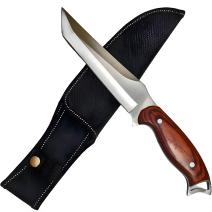
Outdoor Knife TB-39066 - Silver / Brown

Outdoor Knife IK-39016 - Black / Silver

Outdoor Knife SC-27744 - Silver

HA-33034 outdoor Knife - Black

Outdoor Knife IK-39018 - Gold




Comments
Add comment
Login required
To add a comment, you must log in to your account.
Don't have an account? Register